Sedan Rental in Salalah

Sedan Rental in Salalah: Which Car to Choose and What It Costs

If your trip to Dhofar is mostly city driving, the airport run, and paved coastal roads out to Al Mughsail or Taqah, a sedan is the simplest and cheapest way to get around. It is the option most solo travellers, couples, and business visitors land on, because Salalah’s main roads and the bulk of its tourist stops do not need a 4WD. This guide covers the sedan models on offer in Salalah, what they typically cost, when a sedan is the right call and when it is not, plus what to check before you sign for one.

What a Sedan Rental Actually Covers in Salalah

A sedan is a four-door car with a separate boot, usually seating five and holding two to three medium suitcases. In Salalah, this class covers everything from the compact Toyota Yaris to the larger Toyota Camry, and it is built for tarmac driving rather than off-road terrain. Fuel economy is the other draw. A sedan uses noticeably less petrol than an SUV or 4WD over the same distance, which matters if you are on the road daily between the airport, your hotel, and the city’s attractions.

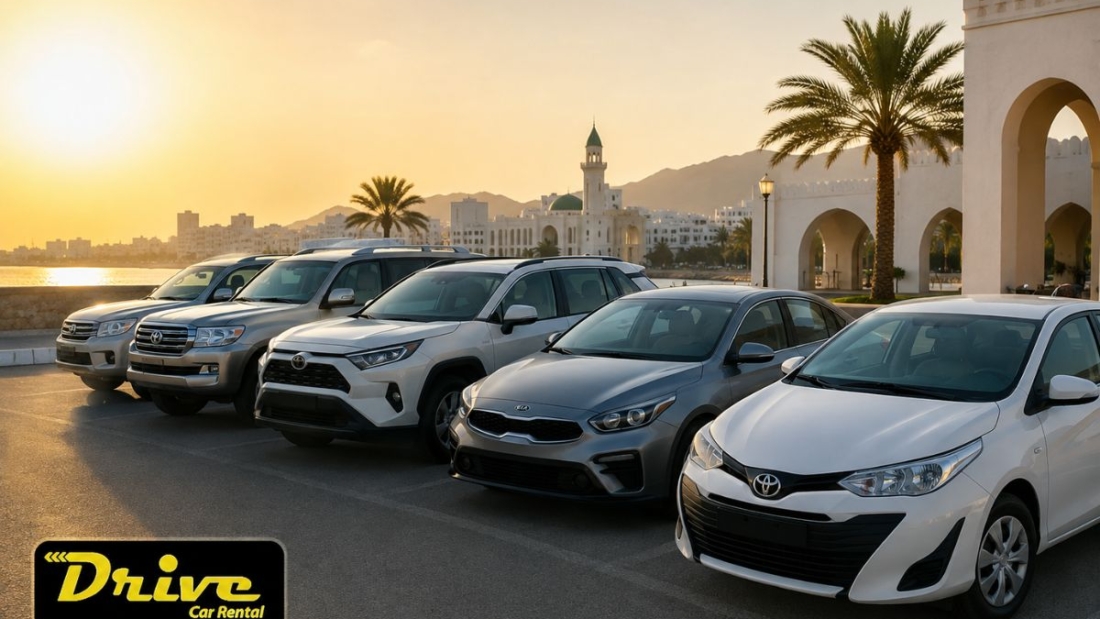
Drive Car Rental keeps its sedan line stocked with the Toyota Yaris, Toyota Corolla, Toyota Camry, Nissan Sunny, and Mazda 6. You can see the current lineup and photos on the vehicles page, or scroll to the fleet section on the homepage.

Is a Sedan Enough for Salalah’s Roads?

Most of Dhofar’s tourist circuit sits on sealed, well-maintained roads, so a sedan handles it without any trouble. The coastal highway out to Al Mughsail Beach, the road up to Wadi Darbat, and the city loop that takes in Al Baleed Archaeological Park, the Museum of the Land of Frankincense, and Al Haffa Souk are all paved. Speed limits on Oman’s dual carriageways top out at 120 km/h, dropping to 100 km/h on single carriageways and 60 to 80 km/h in built-up areas, so a sedan cruises these routes comfortably.

Where a sedan starts to struggle is off the tarmac. Gravel tracks near Jabal Samhan, some of the unpaved approaches to smaller wadis, and any drive into the Empty Quarter call for higher ground clearance and, in the desert’s case, genuine 4WD capability. During Khareef season, from roughly June to September, monsoon runoff can also leave standing water or mud on a few mountain roads, which is another point in favour of an SUV for that stretch of the year. If your itinerary includes any of those, it is worth looking at Drive Car Rental’s SUV and 4WD options, such as the Hyundai Tucson or Toyota Fortuner, on the same vehicles page.

Best Sedans for Rent in Salalah

Not every sedan suits every trip. Here is how the models in a typical Salalah fleet compare, so you can match the car to what you are actually doing.

ModelBest ForSeatsWhy It Works
Toyota YarisSolo travellers, couples, city driving5Light on fuel, easy to park, low daily rate
Nissan SunnyBudget-conscious families5Comparable economy pricing with a roomier boot
Toyota CorollaBusiness trips, longer stays5Quieter cabin and a comfort step up from the Yaris
Toyota CamryCoastal drives, airport transfers5More legroom and a smoother ride on longer routes
Mazda 6Travellers who want a mid-size upgrade5Similar comfort tier to the Camry, slightly different feel

Sedan Rental Rates in Salalah: What to Expect

Across the Salalah market, sedan rental rates generally run from around OMR 12 a day for a basic economy car up to OMR 40 a day for a premium sedan, with weekly and monthly bookings usually working out cheaper per day than a short one or two day hire. Rates also move with the season: Khareef, from June to September, is Salalah’s busiest tourist period, so demand and prices both climb during those months.

Drive Car Rental sets a fixed rate once you book, whether that is daily, weekly, or monthly, so the price at pickup matches what you agreed to online or over the phone. There is no security deposit or credit card hold required, which is unusual in this market and worth asking about if you are comparing quotes from other companies.

For an exact rate on your travel dates, reach the team through the contact page or by calling +968 9265 9484.

What’s Included When You Rent a Sedan with Drive Car Rental

  • A fixed rate agreed before pickup, with no hidden charges added later
  • Insurance cover and a mechanical check on every car before it goes out
  • Pickup and drop-off directly at Salalah International Airport
  • 24/7 phone support for questions, changes, or roadside issues
  • No credit card or security deposit required at handover

Drive Car Rental has operated out of Salalah since 2015, working directly from the airport rather than through a third party, which is why airport pickup is built into the process rather than arranged separately. More on how that works is on the airport pickup and drop-off page.

Documents You Need to Rent a Sedan in Salalah

Residents of Oman

  • A valid Omani driving license
  • Your Oman resident ID or visa

Tourists

  • A passport with a valid visa
  • Your home country’s driving license
  • An International Driving Permit, if your home license is not printed in English or Arabic

For the official rules on licenses and driving in Oman, the Royal Oman Police traffic services portal is the source to check, especially if you are unsure whether your license needs an IDP alongside it.

How to Book Your Sedan at Salalah Airport

Step 1: Pick your model

Decide between an economy sedan like the Yaris or Sunny and a mid-size option like the Corolla, Camry, or Mazda 6, based on how much driving and luggage you are dealing with.

Step 2: Send your dates and flight details

Book through the website, WhatsApp, or a phone call, and share your arrival flight so the car is ready when you land.

Step 3: Collect your car at the airport

Drive Car Rental operates on-site at Salalah International Airport, so there is no separate transfer to a rental depot once you land.

Step 4: Walk around the car before you sign

Check for existing scratches or dents and confirm the fuel policy, then sign and go.

Places You Can Comfortably Reach in a Sedan

  • Al Baleed Archaeological Park, a UNESCO-listed frankincense trade site inside the city
  • Museum of the Land of Frankincense, on the same grounds as Al Baleed
  • Al Haffa Souk, for shopping and a sense of local daily life
  • Sultan Qaboos Mosque, reachable on the city’s main paved roads
  • Al Mughsail Beach, roughly 50 kilometres west on a fully sealed coastal road, known for its blowholes and cliffs
  • Taqah town and Taqah Castle, an easy paved drive east along the coast

Wadi Darbat is also reachable on paved roads for most of the year, though during Khareef the surrounding tracks can get wet enough that an SUV is the more comfortable choice for the last stretch.

Sedan vs SUV: A Quick Decision Guide

If your trip is mostly…Go with
Airport transfers, city driving, hotel-to-beach trips on paved roadsSedan (Yaris, Corolla, Sunny, Camry, Mazda 6)
Wadi routes with gravel sections or desert safaris into the Empty QuarterSUV or 4WD (Hyundai Tucson, Kia Sportage, Toyota Fortuner)
A mix of both, with more city days than off-road daysSedan, with a driver-led day trip for the harder routes

If you would rather skip the driving decision altogether for a day trip into the mountains, Drive Car Rental also offers a car with driver service, which covers exactly this kind of route without needing to switch vehicles.

Tips Before You Drive Off

  • Walk around the car and note any existing damage on the paperwork before you leave the lot
  • Confirm exactly what the quoted rate covers: insurance, mileage, and any extras
  • Ask what the process is if there’s an accident or breakdown, and keep the rental company’s number saved
  • Check the fuel policy so the return condition matches what you agreed to at pickup
  • Test the air conditioning, indicators, and spare tyre before you leave, since Salalah’s midday heat makes a working AC non-negotiable

Frequently Asked Questions

Is a sedan safe to drive to Al Mughsail Beach?

Yes. The road to Al Mughsail is fully paved and used daily by sedans, taxis, and tour vehicles alike. It’s one of the most straightforward drives out of Salalah city.

Can tourists rent a sedan in Salalah without a credit card?

With Drive Car Rental, yes. No credit card or security deposit is required to book or collect a sedan, provided you bring the documents listed above.

What’s the real difference between renting a Toyota Yaris and a Toyota Corolla?

The Yaris is the more compact, more fuel-efficient option and usually the cheaper daily rate. The Corolla is a size up, with a quieter cabin and more boot space, which suits business travellers or anyone driving longer distances each day.

Do I need an International Driving Permit to rent a sedan in Salalah?

Only if your home country’s driving license is not printed in English or Arabic. If it already is, your license alone is usually enough, though it is worth confirming current requirements on the Royal Oman Police traffic services portal before you travel.

Can I switch to an SUV partway through my rental if my plans change?

Reach out directly through the contact page or by phone. Vehicle swaps depend on fleet availability at the time, so it’s best to raise it as early as possible rather than on the day you need the change.

Book Your Sedan in Salalah

If your Dhofar trip is built around the city, the coastline, and the airport run, a sedan will cover it comfortably and cost less than an SUV. Drive Car Rental has been renting cars out of Salalah International Airport since 2015, with a fleet that includes the Yaris, Corolla, Camry, Sunny, and Mazda 6, fixed pricing, and no deposit required. Call or WhatsApp +968 9265 9484, or book through the homepage, and have your sedan ready when you land.

Location Voiture Salalah: French Traveler's Car Rental Guide 2026 | Drive Car Rental

Location Voiture Salalah : A French Traveler’s Guide to Renting a Car in Salalah, Oman

Salalah sits at the southern edge of Oman, closer in spirit to the Horn of Africa than to the desert landscapes most people picture when they think of the Arabian Peninsula. For a French traveler arriving here, a rental car opens up the coast, the mountains, and the wadis on your own schedule instead of a tour bus timetable.

This guide walks through everything you need before booking a location voiture in Salalah: the documents required, realistic pricing, which vehicle suits which route, and the driving habits that differ from home.

Why French Travelers Are Discovering Salalah

Salalah doesn’t get the attention Muscat or Dubai does in French travel media. That’s changing. Search interest in “voiture Salalah,” “road trip Oman,” and related terms has grown as independent European travelers look past the usual Gulf stopovers.

One season explains most of it. The Khareef, from late June to early September, brings monsoon cloud and steady drizzle to the hills around the city while the rest of the Arabian Peninsula sits under dry heat. Wadi Darbat fills with water. Waterfalls appear on cliffs that stay bare the rest of the year. The whole region turns green almost overnight.

It’s a sharp contrast to the sand-and-sun image most people carry of Oman. It draws travelers who want to hike, photograph landscapes, and drive winding roads, not sit by a resort pool.

Outside Khareef, Salalah still delivers. The frankincense trade that made this region famous in antiquity is visible in the souqs and archaeological sites around the city. The coastline toward Mirbat holds some of the country’s quieter beaches.

Why Driving in Oman Feels Familiar for a French Visitor

Oman drives on the right, exactly as France does. No mental adjustment needed for lane position or roundabout direction, which is one less thing to think about after a long flight.

Road signage across the Dhofar region uses both Arabic and English. The highway linking Salalah city to Wadi Darbat, Mughsail Beach, and the switchbacks toward Jabal Samhan is sealed and well maintained for most of its length.

Familiarity with traffic direction doesn’t mean every local driving habit matches what you know from France, though. We cover the specific differences further down.

What You Need to Rent a Car in Salalah as a French Citizen

Three documents cover almost every situation:

  • A valid French passport with an active visa or visa-on-arrival stamp
  • Your French driving license
  • An International Driving Permit (IDP)

Why the International Driving Permit Matters

A French license on its own is sometimes accepted, but not guaranteed, and policy varies by agency. The IDP solves this. It’s a standardized document, recognized under international convention, that translates your license details into a format any traffic authority or rental staff can verify instantly.

Carrying one removes the guesswork and speeds up the counter process, especially on a late-arriving flight when you want to be on the road quickly.

Getting an IDP in France is usually arranged through your local prefecture before you travel. For the full picture on when it’s required for Oman specifically, see Do You Need an International Driving License to Rent a Car in Oman?

Deposits and What to Confirm Before You Book

Most companies in Salalah, Drive Car Rental included, don’t require tourists to leave a credit card hold or cash deposit at pickup. That’s not universal across the industry. Some agencies still hold a deposit against your card until the car comes back undamaged.

Confirm this in writing before you book, along with what the quoted rate actually covers: insurance, a daily mileage allowance if one applies, and whether airport pickup carries an extra fee.

What a Location Voiture Salalah Actually Costs

Rates vary by vehicle class, season, and how far ahead you book. The table below gives a realistic daily range, converted roughly into euros so you can plan without doing currency math at the counter.

Vehicle TypeExample ModelsDaily Rate (OMR)Approx. Daily Rate (EUR)Best For
Economy SedanToyota Yaris, Nissan Sunny10 to 1424 to 33City driving, airport to hotel
Mid-size SedanToyota Corolla, Mazda 614 to 1833 to 43Comfort for two adults with luggage
Compact SUVHyundai Creta, Nissan Kicks17 to 2241 to 53Small families, light off-road
4WDHyundai Tucson, Kia Sportage22 to 2853 to 67Wadi Darbat, Jabal Samhan, mountain roads
Full-size 4WDToyota Fortuner, Nissan Patrol28 to 3867 to 91Desert routes, larger groups

How Booking Length Affects the Rate

These figures are standard daily rates, without extras like a driver or one-way drop-off at a different location. Weekly and monthly bookings usually bring the per-day cost down noticeably.

If your trip runs beyond a week, ask directly for a weekly rate. Don’t assume the daily price simply multiplies.

Choosing the Right Car for Your Itinerary

Not every trip through Dhofar needs the same vehicle. Picking the wrong class either wastes money or leaves you underprepared for the roads ahead.

City Trips and the Coastal Route

If your time in Salalah is mostly the city, the beach corniche, and short drives to spots like Al Husn Souq or the Sultan Qaboos Mosque, an economy sedan like the Yaris or Sunny is the practical choice. These cars are easy to park, cost less to fuel, and handle the flat, well-paved city roads without compromise.

More detail here: Benefits of Renting a Toyota Yaris in Salalah

Mountain and Wadi Routes

The calculation changes once Wadi Darbat, the Frankincense Land museum route, or the climb toward Jabal Samhan enter your plans. These roads gain elevation fast. Some stretches near the wadis are unpaved or affected by seasonal water flow during Khareef.

Ground clearance and a 4WD drivetrain matter more here than fuel economy. Our guide covers exactly who benefits from the upgrade: Car Rental Salalah 4×4: Benefits, Who Should Rent One, Pricing, and What to Check

Still weighing a sedan against an SUV for a mixed itinerary? This comparison breaks the decision down by route type: SUV vs. Sedan: What Do You Actually Need for the Dhofar Mountains?

Booking a Rental Car Before You Land

Reserving ahead isn’t mandatory in Salalah, but it removes uncertainty from your first hour in the country. A confirmed booking means your car is waiting, not something you’re negotiating for at a counter after a long flight.

The Booking Process Step by Step

  1. Contact the rental company by phone, WhatsApp, or an online form with your arrival date, flight details if possible, and preferred vehicle type
  2. Get written confirmation of the daily rate, what’s included for insurance and mileage, and any pickup or after-hours fees
  3. Land at Salalah International Airport and collect the vehicle directly. Drive Car Rental operates on-site, so there’s no separate shuttle or off-airport transfer
  4. Walk around the car with staff before signing anything, and make sure existing scratches or wear are noted on the paperwork

Current fleet and availability: drivecarrentaloman.com

Driving Notes Specific to French Visitors

A handful of details differ enough from French roads to be worth knowing before you set off.

Speed Limits and Enforcement

Speed limits are posted in kilometers per hour, so no unit conversion is needed. Enforcement is strict on the main highways. Radar cameras are common on the route between Salalah and Mirbat.

Sticking close to the posted limit is the safer habit, since fines here come through the camera network rather than an officer flagging you down.

Roundabout Behavior

Roundabouts around Salalah don’t always follow French priority rules. In several locations, traffic already circulating has the right of way. In others, local custom leans differently depending on lane markings and signage.

Watch the signage at each roundabout and follow local traffic rather than habit.

Fuel Availability

Fuel stations are frequent and easy to find within Salalah city and along the main coastal road. They get noticeably sparser once you head into the mountain routes or toward less developed stretches near the desert.

Fill the tank before any day trip beyond the city limits.

Official Resources for Driving in Oman

For the authoritative rules on licensing, traffic law, and accident procedures, the Royal Oman Police traffic services portal is the government source to consult.

French travelers can also check the French Ministry for Europe and Foreign Affairs travel advice for Oman, which covers entry requirements, current safety guidance, and regulations specific to French nationals.

Frequently Asked Questions

Can I rent a car in Salalah with just my French driving license?

Some agencies accept a French license on its own, but acceptance isn’t guaranteed everywhere. An International Driving Permit removes the uncertainty, since it’s a standardized document Omani staff can verify immediately.

Is it safe for a French tourist to drive alone in Salalah?

Yes, for the most part. Salalah city and the main tourist routes, including the roads to Wadi Darbat and Mughsail Beach, are well signed and well maintained. The area requiring extra care is off-road or desert terrain, where vehicle choice and route planning matter more than driving experience.

How far in advance should I book a rental car for Khareef season?

Two to three weeks ahead of a July or August trip is a sensible margin. Khareef is the busiest tourism period in Salalah, and popular categories, 4WDs especially, get reserved out well before the season peaks.

Do I need a deposit to rent a car in Salalah?

Not with Drive Car Rental, where no credit card hold or cash deposit is required from tourists. This isn’t standard across every company in the city, so confirm it directly with whichever agency you’re considering.

Can I pick up my rental directly at the airport?

Yes. Drive Car Rental operates on-site at Salalah International Airport, so the car is collected right after your flight lands, with no separate transfer into the city first.

Why Travelers Choose Drive Car Rental

Drive Car Rental has operated in Salalah since 2015, working directly out of Salalah International Airport with a fleet of more than 100 vehicles, from economy sedans like the Yaris for city driving to full-size 4WDs like the Nissan Patrol for mountain and desert routes.

Every vehicle goes through inspection before handover. Pricing stays fixed once a booking is confirmed. The team is reachable around the clock if a question comes up during the trip.

This isn’t the only guide written for visitors from a specific country. Our piece on why Poland travelers choose Drive Car Rental offers a useful comparison for how priorities differ across nationalities.

For questions before your trip, reach the team at +968 9265 9484 or on WhatsApp for vehicle availability on your specific travel dates.

suv for rent salalah

SUVs for Rent in Salalah: The Complete Guide to Picking the Right 4WD

If you’re heading into the Dhofar mountains, the Empty Quarter, or just want more ground clearance around Salalah’s monsoon-season roads, an SUV is usually the smarter rental than a sedan. For city driving and light off-road tracks, a 5-seater SUV like the Hyundai Creta or Kia Sportage covers most needs and rents for roughly 18 to 28 Omani Rial a day. For mountain routes around Wadi Darbat and Jabal Samhan, or a group of five or more, a 4WD like the Hyundai Tucson, Toyota Fortuner, or Nissan Patrol handles the terrain better and starts around 25 to 45 Rial a day depending on the model and rental length. Book directly with a Salalah-based operator so you get a vehicle already set up for local roads and 24/7 support if something goes wrong out past the city.

Why Rent an SUV Instead of a Sedan in Salalah

Salalah looks flat and coastal from the airport, but the terrain changes fast once you’re a half hour out of the city. The road up to Jabal Samhan climbs into cloud cover during Khareef season. The tracks around Wadi Darbat and Mughsail Beach are paved but steep in places, with tight switchbacks. If your plans stretch toward the Empty Quarter or the desert routes east of Mirbat, you’re looking at unpaved sand tracks where a sedan’s low clearance and front-wheel drive genuinely struggle.

An SUV gives you three practical advantages here: higher ground clearance for uneven or flooded sections during Khareef (the June to September monsoon season that draws over a million visitors to Dhofar every year, according to the Ministry of Heritage and Tourism), more stable handling on mountain curves, and enough boot space for luggage, cooler boxes, or camping gear if you’re planning a night out near Wadi Darbat and the eastern Dhofar viewpoints.

If you’re still weighing it up, our earlier breakdown on SUV versus sedan for the Dhofar mountains goes deeper into which trips actually need the extra power.

SUV Fleet Available for Rent in Salalah

Drive Car Rental keeps a working fleet of more than 100 vehicles at Salalah International Airport, and the SUV lineup covers everything from a compact crossover for two people to a full-size 4WD for a family of seven. Here’s what’s currently available and what each one suits best.

ModelSeatsDrivetrainBest suited forApprox. daily rate
Hyundai Creta52WD/AWD optionsCity driving, light coastal roads, first-time visitors18 to 25 OMR
Nissan Kicks SUV52WDCompact family trips, Salalah city and nearby beaches17 to 24 OMR
Kia Sportage 4WD54WDWadi Darbat, Mughsail, moderate mountain roads24 to 32 OMR
Hyundai Tucson 4WD54WDJabal Samhan, mixed paved and unpaved routes26 to 34 OMR
Nissan Xterra 4WD54WDOff-road tracks, desert edges, higher clearance needsupto 40 OMR
Toyota Fortuner V6 4000cc74WDLarge families or groups, long-distance comfort35 to 45 OMR
Nissan Patrol 4WD74WDSerious off-roading, Empty Quarter routes, heavy loads55 to 70 OMR

Rates shift with season, rental length, and whether you’re booking daily, weekly, or monthly, so treat this table as a planning range rather than a fixed quote. For an exact price on your dates, call or WhatsApp the team directly, or browse the full lineup on the vehicles page.

We’ve also covered a few of these models in more depth if you want the full picture before deciding: the Kia Sportage rental guide, the Hyundai Tucson 4WD writeup, the Nissan Xterra 4WD review, the Toyota Fortuner V6 breakdown, the Nissan Patrol 4WD guide, and the Hyundai Creta overview.

5-Seater or 7-Seater: Which One Do You Actually Need

This is the question we get asked most at the counter, and the answer usually comes down to two things: how many people are travelling and how far off the paved road you’re going.

A 5-seater SUV like the Hyundai Creta, Kia Sportage, or Hyundai Tucson is the right call if you’re a couple, a small family, or a group of three to four adults sticking mostly to city driving, the coast road, and moderate routes like Wadi Darbat. They’re easier to park, use less fuel, and cost less per day than the larger 4WDs.

A 7-seater like the Toyota Fortuner or Nissan Patrol makes more sense once you’re travelling with five to seven people, carrying a lot of luggage, or planning a route that includes genuinely rough terrain such as the desert tracks toward the Empty Quarter. These vehicles sit higher, carry more torque for sand and incline driving, and give every passenger more room on longer drives. If you’re specifically travelling as a larger family group, our guide to 7-seater car rental in Oman for families walks through seating configurations and luggage space in more detail.

Best SUV for Popular Dhofar Routes

DestinationTerrainRecommended SUV
Wadi DarbatPaved road, steep switchbacksKia Sportage 4WD or Hyundai Tucson 4WD
Jabal Samhan viewpointMountain road, cloud cover in KhareefHyundai Tucson 4WD or Nissan Xterra 4WD
Mughsail Beach and blowholesCoastal, mostly paved with a short gravel stretchAny 5-seater SUV
Tawi Atair SinkholePaved with rougher final approachKia Sportage or Toyota Fortuner
Empty Quarter (Rub al Khali) edge routesUnpaved sand tracksNissan Patrol 4WD or Toyota Fortuner
Salalah city and hotel transfersFully pavedHyundai Creta or Nissan Kicks

If your itinerary spans more than one of these in the same trip, book the SUV that matches your toughest stop, not your easiest one. A car that’s fine on the coast road can still struggle on the final stretch up to a mountain viewpoint.

What Affects SUV Rental Prices in Salalah

A handful of factors move the price up or down beyond the base daily rate:

Season. Khareef season (June through September) sees the highest demand as visitor numbers to Dhofar climb into the hundreds of thousands, so booking an SUV two to three weeks ahead is worth it if you’re travelling in July or August.

Rental length. Weekly and monthly rates bring the per-day cost down noticeably compared to a one or two day booking. If you’re staying a week or longer, always ask for the weekly rate rather than paying the daily price seven times over.

4WD versus 2WD. True 4WD models with low-range gearing, like the Patrol and Fortuner, sit at the top of the price range because they’re built for terrain the smaller crossovers can’t handle.

Insurance and mileage. Confirm whether the quoted rate includes full insurance and unlimited mileage, or whether these are separate. A rate that looks cheaper upfront can end up costing more once mileage caps or partial insurance come into play. If budget is the main driver behind your search, our cheap car rental Salalah guide breaks down where the real savings are without cutting corners on safety.

What to Check Before Renting an SUV in Salalah

A short walkaround before you sign anything saves a lot of hassle later:

  • Inspect the tyres, spare wheel, and undercarriage clearance, especially if you’re heading off paved roads.
  • Confirm the drivetrain. Some listings say “SUV” but are actually front-wheel drive only, which matters a lot on mountain or sand routes.
  • Ask what the insurance covers if the car picks up damage on an unpaved track, since some policies exclude off-road use.
  • Check the air conditioning thoroughly. Salalah’s coastal humidity makes a weak AC unit a real problem, not a minor inconvenience.
  • Confirm the fuel policy and what happens if you return the car with less fuel than it left with.
  • Ask about 24/7 roadside support. Dhofar’s mountain and desert roads are remote enough that breaking down without a support number to call is genuinely stressful.

For general driving rules and licence requirements while on Omani roads, the Royal Oman Police traffic services portal is the official reference to check before you drive.

Documents You Need to Rent an SUV in Salalah

Tourists need a valid passport with an entry visa, an International Driving Permit if your home licence isn’t in English or Arabic, and your original driving licence. Most reputable rental companies in Salalah, including ours, don’t require a credit card or security deposit from visitors.

Residents need a valid Omani driving licence along with their resident ID or visa. Same as tourists, a deposit shouldn’t be required if you’re renting from an established local operator.

Frequently Asked Questions

Is it worth renting an SUV instead of a sedan in Salalah?

Yes, if your trip includes Jabal Samhan, Wadi Darbat, desert routes, or Khareef-season driving. For pure city use, a sedan is cheaper and just as practical.

What’s the cheapest SUV to rent in Salalah?

Compact 5-seater SUVs like the Nissan Kicks and Hyundai Creta are the most budget-friendly options, typically starting around 17 to 20 Omani Rial a day depending on season and rental length.

Do I need a 4WD to visit Jabal Samhan or Wadi Darbat?

The main routes are paved, but a 4WD like the Hyundai Tucson or Kia Sportage gives you more confidence on the steeper switchbacks, particularly during Khareef when mist and light rain reduce visibility and grip.

Can I rent an SUV directly at Salalah Airport?

Yes. Drive Car Rental operates on-site at Salalah International Airport, so you can collect your SUV right after landing without arranging a separate transfer.

How many people fit in a 7-seater SUV rental?

Seven passengers plus standard luggage in models like the Toyota Fortuner and Nissan Patrol, though loading heavy camping or desert safari gear will reduce comfortable capacity to around five or six with full bags.

Is a security deposit required to rent an SUV in Salalah?

Not with Drive Car Rental. Both residents and tourists can book without a credit card or security deposit, provided the required documents are in order.

Booking Your SUV in Salalah

Whichever route you’re planning, matching the vehicle to the terrain makes the trip smoother than defaulting to whatever’s cheapest at the counter. For a wider look at fleet options and pickup logistics across all vehicle types, see our full car rental in Salalah 2026 guide, or read more on 4WD rentals specifically if off-road capability is your priority.

Drive Car Rental has been operating out of Salalah International Airport since 2015, with every SUV in the fleet inspected and insured before handover. Call or WhatsApp +968 9265 9484, or visit the homepage to check current availability and book your SUV in Salalah.

How to Rent a Car in Salalah: A Complete Step-by-Step Guide for Tourists and Residents

How to Rent a Car in Salalah: A Complete Step-by-Step Guide for Tourists and Residents

Renting a car in Salalah comes down to five steps: choose the right vehicle for your trip, book it before you land, bring the correct documents (a passport and International Driving Permit for tourists, or an Omani license and resident ID for residents), inspect the car at pickup, and confirm the price includes insurance and mileage before you sign anything. Most rental companies, including ours, operate right at Salalah International Airport, so you can be driving within twenty minutes of collecting your bags.

That’s the short version. If you want to actually understand why each step matters, and avoid the mistakes that trip up first-time visitors to Dhofar, keep reading.

Why Renting a Car in Salalah Is Different From Other Cities

Salalah isn’t Muscat, and it isn’t Dubai. The city itself is compact and walkable in parts, but the reason people come to Dhofar, Wadi Darbat, Mughsail Beach, Jabal Samhan, the Empty Quarter, sits well outside taxi range and public transport doesn’t reach most of it. A rental car is less of a convenience here and more of the only practical way to see the region.

There’s also a seasonal factor unique to this part of Oman. Between June and September, the Khareef monsoon turns the hills around Salalah green and pulls in visitors from across the Gulf, which means rental cars book out fast and prices climb. Outside Khareef season, availability is easier and rates drop, so when you’re planning your trip matters almost as much as who you rent from.

Step 1: Decide What Kind of Car You Actually Need

Before you even open a booking form, work out what your trip looks like. If you’re staying close to the city, moving between your hotel, the souq, and the beachfront, a compact sedan like a Toyota Yaris or Nissan Sunny is cheaper to run and easier to park. If Wadi Darbat, the mountain roads toward Jabal Samhan, or the desert tracks beyond the city are on your list, you’ll want a 4WD with proper ground clearance, something like a Hyundai Tucson, Kia Sportage, or Toyota Fortuner. Families travelling with more than four people usually do better in a 7-seater SUV rather than trying to squeeze everyone and their luggage into a sedan.

If you’re still deciding between a sedan and an SUV, it’s worth reading through our comparison of city cars versus 4WDs for the Dhofar mountains before you book.

Step 2: Book Ahead, Especially in Khareef Season

Walk-up rentals do happen in Salalah, but they’re a gamble. Between June and September the good vehicles go first, and during regular months booking even a day ahead means you skip the risk of your preferred car being unavailable when you land. Booking ahead also locks in your rate. A rental company that keeps its pricing fixed once you book, rather than adjusting it at the counter, is one less thing to negotiate over after a long flight.

Step 3: Have the Right Documents Ready

This is where most delays happen, and it’s avoidable. Requirements differ slightly depending on whether you’re a resident or a visitor.

Tourists need a passport with a valid visa, their home country’s driving license, and an International Driving Permit if that license isn’t printed in English or Arabic. Residents need a valid Omani driving license along with their resident ID or visa. Neither group needs a credit card or security deposit with most reputable Salalah operators, though it’s worth confirming this directly since policies vary by company.

If your license is from a country whose IDP requirements aren’t obvious, our breakdown of when you need an International Driving Permit to rent a car in Oman covers the specifics by country.

Step 4: Know What to Check Before You Sign Anything

A rental agreement takes two minutes to read properly, and that two minutes can save you a dispute later. Before you hand over payment or drive off, confirm the following:

What the quoted price actually includes. Ask whether insurance, mileage, and Salalah airport pickup are already in the rate, or charged separately. A transparent rental company explains this without you having to ask twice.

The condition of the car. Walk around the vehicle with the staff member and note any existing scratches or dents on the paperwork before you drive off, so you’re not held responsible for damage that was already there.

The fuel policy. Most companies expect the car returned with the same fuel level it left with. Confirm this at pickup so it isn’t a surprise at drop-off.

Insurance coverage and what happens after an accident. Ask what the process looks like if something goes wrong, including whether you’d need to file a report with the Royal Oman Police.

Cancellation and date-change terms. Travel plans shift. Know upfront whether you can move your dates without a penalty.

Roadside assistance. Dhofar’s roads reach into some genuinely remote stretches. A company that offers 24/7 support matters more here than it would in a small, dense city.

For a longer checklist that applies across Oman generally, see what to check before renting a car in Oman.

Step 5: Collect the Car and Do a Two-Minute Walkaround

Once you’re at the counter, whether that’s inside Salalah International Airport or at a city branch, the handover itself should be quick. Check the air conditioning, indicators, tyres, and spare wheel before leaving the lot. It’s a small habit that catches problems while you can still ask for a swap, rather than an hour into your drive.

What It Costs to Rent a Car in Salalah

Prices shift with season, vehicle type, and rental length, but here’s a realistic range for daily rentals outside peak Khareef weeks:

Vehicle TypeExample ModelsApproximate Daily Rate
Economy SedanToyota Yaris, Nissan SunnyOMR 10 to 15
Mid-size SedanToyota Corolla, Mazda 6OMR 15 to 20
Compact SUV / 4WDHyundai Tucson, Kia SportageOMR 20 to 30
Full-size 4WDToyota Fortuner, Nissan PatrolOMR 30 to 45

Weekly and monthly bookings usually bring the per-day cost down. If budget is the main driver of your decision, our guide to cheap car rental in Salalah breaks down real prices by car type and season.

Where You’ll Actually Drive Your Rental Car

Most visitors renting a car in Salalah are heading to a handful of well-known spots: Wadi Darbat for the lake and boat rides, Mughsail Beach for the blowholes, Jabal Samhan for the drive up into the mountains, and the frankincense sites around the old town. A sedan handles the city and the paved routes to most of these comfortably. A 4WD becomes useful once you’re going further off the main road or driving during or right after Khareef, when some tracks get muddy. For a fuller list of where a rental car actually earns its keep, our post on the best places to visit in Salalah is worth a look before you plan your route.

Renting at Salalah International Airport vs. In the City

Picking up your car directly at Salalah International Airport is the simplest option for most visitors landing on a flight, since it skips a separate taxi transfer straight after arrival. City pickup can work out slightly cheaper for residents or anyone already staying centrally, but for a first visit, airport pickup is worth the small convenience. We cover the differences in more depth in our guide to renting a car at Salalah Airport.

Frequently Asked Questions

How do I rent a car in Salalah as a tourist?

Bring your passport, valid visa, home country driving license, and an International Driving Permit if your license isn’t in English or Arabic. Book your vehicle ahead of arrival, collect it at Salalah International Airport or a city branch, and confirm the price covers insurance and mileage before you sign.

Do I need an international license to rent a car in Salalah?

Only if your home license isn’t printed in English or Arabic. If it is, most rental companies in Salalah will accept it alongside your passport and visa.

Is it cheaper to rent a car at the airport or in the city?

Rates are usually similar. Airport pickup saves you a transfer and is the more practical choice for visitors arriving by flight, while city pickup can suit residents already based centrally.

Can I rent a car in Salalah without a credit card?

Yes, with most local operators. Many Salalah rental companies, including ours, don’t require a credit card or security deposit, though it’s worth confirming this directly when you book.

What’s the best car to rent for driving to Wadi Darbat or Mughsail?

A standard sedan is fine for the paved roads to both. If you’re planning to go further into Jabal Samhan or off the main track, a 4WD like a Hyundai Tucson or Toyota Fortuner gives you more clearance and confidence.

Is Khareef season a bad time to rent a car in Salalah?

Not bad, just busier. Between June and September demand rises sharply, so book earlier than you would the rest of the year and expect rates to be somewhat higher.

Ready to Book Your Rental Car in Salalah

Drive Car Rental has been handing over keys at Salalah International Airport since 2015, with more than 100 vehicles on the road and no credit card or deposit required. If you know what you need, browse our full fleet and book ahead, or call +968 9265 9484 and our team will help you match a car to your trip.

Rent a Car in Oman with Self Drive

Rent a Car in Salalah Oman with Self Drive: A Complete Traveler’s Guide (2026)

If you want to rent a car in Salalah Oman with self drive, you’ll need three things sorted before you land: a valid driving licence paired with an International Driving Permit, a rental company that doesn’t demand a security deposit or credit card, and a car that actually matches the roads you plan to cover, whether that’s the coastal highway into Salalah or the mountain passes of Dhofar. Get those three right and self-drive is by far the easiest way to see Salalah and the wider Dhofar region on your own schedule.

Oman isn’t a country you experience well from the back seat of a taxi. Buses run on fixed routes, taxis get expensive fast once you start covering real distance, and most of what makes Dhofar special, Wadi Darbat, the Mughsail blowholes, the frankincense hills, the stargazing spots outside town, sits well outside the city centre. A self-drive rental gives you the freedom to stop when a view is worth stopping for, instead of working around someone else’s timetable.

This guide walks through everything a first-time self-drive traveler in Oman actually needs to know: who qualifies to rent, what the process looks like, which car suits your trip, roughly what it costs, where to drive, and the road rules that keep a holiday from turning into a hassle.

Who Can Rent a Self-Drive Car in Salalah Oman

Oman keeps the rules for self-drive rentals fairly straightforward, but they matter, and rental desks will turn you away at the counter if your paperwork is short.

For tourists visiting on a tourist visa, you need a valid passport, your home country driving licence, and an International Driving Permit. Oman allows foreign visitors to self-drive on their home licence plus an IDP for up to 90 days from entry. After that window, the IDP is no longer valid for use in the country, so anyone staying longer needs to look into converting to a local licence. Most renters must also be at least 21 years old, and some vehicle categories set the minimum a little higher.

Omani citizens and residents need a valid Omani driving licence and their resident ID or visa. Reputable local operators, including Drive Car Rental, let both groups book without a credit card or security deposit, which removes one of the more annoying parts of renting abroad.

Traveler typeWhat you need
Tourist (short stay)Passport, home country licence, International Driving Permit, minimum age 21
GCC or long-stay visitorHome licence plus IDP for the first 90 days, then conversion if staying longer
Oman residentValid Omani driving licence, resident ID or visa

If you’re unsure whether your licence needs an IDP alongside it, our detailed breakdown on whether you need an international driving licence to rent a car in Oman covers the paperwork case by case, and the Royal Oman Police is the official source for current licensing and traffic rules if anything changes closer to your travel date.

How Self-Drive Car Rental Actually Works in Oman

The process is simpler than most first-timers expect, and it typically runs in four steps.

You start by booking ahead, either through a rental company’s website, WhatsApp, or a phone call, and specifying your dates, pickup point, and preferred vehicle type. Airport pickup is the most common choice for tourists landing in Salalah, since it means you’re driving within minutes of clearing arrivals rather than hunting for a taxi first.

Next comes the paperwork check. Bring your licence, IDP if required, and passport to the handover. A reliable company will walk the car with you before you drive off, noting any existing scratches or dents on both sides so there’s no dispute at return. This is also the point to confirm what’s included in your quoted price: insurance, mileage allowance, and any add-ons like an extra driver or a car seat.

Then you drive. Most operators in Salalah offer 24/7 roadside support, which matters more here than in a lot of destinations because some of Dhofar’s best routes run through areas with patchy phone signal.

Finally, return the car with the same fuel level you received it at (this is the standard policy almost everywhere, so keep your first fuel receipt) and do a final walkaround together. If you’re picking up straight from the terminal, our guide on renting a car at Salalah Airport covers exactly what to expect at that counter.

Choosing the Right Car for Self-Drive Travel in Oman

The car you pick should match your route, not just your budget. A sedan is fine for Salalah’s city roads and the coastal highway, but the mountain passes and desert tracks around Dhofar are a different story.

Sedans (Toyota Yaris, Toyota Corolla, Nissan Sunny) suit travelers sticking to paved roads, city driving, and short coastal trips. They’re the cheapest to rent and the cheapest to fuel, and they’re perfectly comfortable for getting between hotels, the airport, and Salalah’s main attractions.

Mid-size SUVs (Hyundai Creta, Kia Sportage) split the difference. They handle light gravel and unpaved access roads better than a sedan, sit higher for visibility on winding routes, and still don’t cost much more to run than a sedan on longer rentals.

4WD vehicles (Nissan Patrol, Toyota Fortuner, Hyundai Tucson 4WD, Nissan Xterra) are the right call if Wadi Darbat’s rougher tracks, the Dhofar mountains, or any desert driving are on your itinerary. Loose sand and steep, unsealed inclines are where a 4WD earns its higher daily rate.

If you’re torn between an SUV and a full 4WD for a mountain-heavy trip, our comparison on SUV vs sedan for the Dhofar mountains and our deeper look at 4×4 rentals in Salalah both go through the trade-offs in more detail. For city-only trips on a tighter budget, the Toyota Yaris rental guide is worth a look too.

What It Costs to Rent a Self-Drive Car in Oman

Rates vary by season, vehicle category, and rental length, but here’s a realistic starting range for Salalah, where most self-drive tourism in Oman is centred.

Vehicle typeTypical daily rateBest for
Economy sedanBudget-friendlyCity driving, airport transfers, coastal roads
Mid-size SUVModerateMixed city and light off-road routes
4WD / SUV 7-seaterHigherMountains, desert tracks, larger groups

Longer bookings almost always work out cheaper per day, so if you’re staying a week or more, ask about weekly or monthly rates rather than paying the daily price throughout. Our cheap car rental guide for Salalah breaks down real numbers by car type if budget is your main concern.

Fuel is one of the few genuine bargains left in Oman travel. As of mid-2026, petrol runs at roughly 0.24 OMR per litre for 95-octane, which is a fraction of what most European and North American travelers are used to paying. Budget for it, but don’t let it be a deciding factor in your trip planning the way it might be elsewhere.

Best Self-Drive Routes from Salalah

This is where self-drive actually pays off. A car gives you access to places a tour bus schedule simply won’t accommodate.

Wadi Darbat, with its seasonal waterfalls and boat rides, sits about 45 minutes from central Salalah and rewards an early start before the crowds. Mughsail beach and its blowholes make for an easy half-day loop along the coast. The frankincense trees near Wadi Dawkah and the ruins of the old port at Al Baleed give the trip some historical depth, and if you have more time, the Dhofar mountain roads open up viewpoints that most day-trippers never reach.

For a fuller list of stops worth building into your route, see the best places to visit in Salalah and our guide to hidden places most tourists miss. If a desert overnight is on your list, preparing for a self-drive desert safari covers tyre pressure, water, and navigation basics before you head off-road. Oman’s Ministry of Heritage and Tourism also keeps an official attractions guide that’s worth a scan while you’re planning.

Road Rules and Safety Tips for First-Time Self-Drive Travelers

Oman’s roads are well maintained and well signed, but a few local rules catch first-time renters off guard.

Speed limits generally sit around 120 km/h on expressways, 90 km/h on rural roads, and 40 to 80 km/h through urban areas, and speed cameras are common enough that it’s not worth testing the limits. Seatbelts are mandatory for every seat, and children under four need a proper car seat, which most rental companies can add for a small fee. Oman enforces its drink-driving laws strictly, so the safest approach is simply not to drink before driving at all.

If you’re new to driving in the region, a few small habits go a long way: keep a longer following distance than you would at home, watch for camels and loose livestock on rural roads especially around dusk, and check your fuel policy before you leave the return lot so there are no surprises. Our post on common mistakes first-time self-drive travelers make in Salalah goes through the specifics, and it’s worth pairing with a quick read of what rental car insurance in Oman actually covers so you know exactly what you’re liable for if something goes wrong.

Why Travelers Choose Drive Car Rental for Self-Drive in Salalah

Drive Car Rental has been operating in Salalah since 2015, which puts us past the eleven-year mark of doing this specific job in this specific city. In that time we’ve completed more than 2,000 rentals for over 1,500 customers, and we currently hold an average customer rating of 4.9 out of 5.

What that experience translates to for a self-drive traveler is practical, not just a number on a page: a fleet of more than 100 vehicles covering everything from an economy Toyota Yaris to a full-size Nissan Patrol 4WD, pickup directly at Salalah International Airport so you’re driving within the hour, no security deposit or credit card required to book, transparent pricing with no hidden add-ons, and 24/7 roadside assistance if you run into trouble on a mountain road or a desert track.

If you’re ready to book, call or WhatsApp us at +968 9265 9484, or start with our full Salalah car rental guide for 2026 to see the entire fleet and current offers.

Frequently Asked Questions

Do I need an International Driving Permit to self-drive in Salalah, Oman?

Most tourists do. Oman requires visitors to carry their home country licence together with a valid IDP, and this combination is valid for self-drive for up to 90 days from entry.

What is the minimum age to rent a self-drive car in Salalah?

Most rental companies, including Drive Car Rental, set the minimum age at 21, though some larger 4WD categories may require drivers to be a little older.

Is self-drive safer than hiring a taxi in Salalah?

Both are safe when you follow local road rules. Self-drive simply gives you more control over route and timing, which matters most once you’re heading outside the city to places like Wadi Darbat or the Dhofar mountains.

Do I need a 4WD to explore Dhofar, or is a sedan enough?

A sedan covers the city and coastal highway comfortably. If Wadi Darbat’s rougher tracks, mountain roads, or any desert driving are on your list, a mid-size SUV or full 4WD is the safer, more comfortable choice.

Can I rent a car directly at Salalah Airport?

Yes. Drive Car Rental operates pickup and drop-off right at Salalah International Airport, so there’s no need to arrange separate transport before collecting your vehicle.

What happens if I have an accident or breakdown while self-driving?

Call your rental company’s emergency line immediately. Reputable operators, including Drive Car Rental, provide 24/7 roadside assistance and can arrange a replacement vehicle if needed.

Is a security deposit required to rent a self-drive car in Salalah?

Not with Drive Car Rental. Bookings can be made without a credit card or security deposit, which is one of the more traveler-friendly policies among local operators.

cheap car rental salalah

Cheap Rental Car Salalah: Real Prices, Car Types and How to Book Without Overpaying

If you are searching for a cheap rental car in Salalah, here is the short answer: a small economy sedan like a Nissan Sunny or Toyota Yaris starts around 8 to 12 OMR per day, a compact SUV runs 15 to 20 OMR per day, and prices drop further the longer you rent. Weekly and monthly bookings almost always work out cheaper per day than a single-day rental, and picking a car up directly at Salalah Airport with no security deposit keeps the total cost down even more.

That is the number most people landing on this page actually want. Everything below explains where that number comes from, which cheap car rent Salalah option fits your trip, and how to avoid the small charges that quietly push up a “cheap” booking.

Why Salalah Car Rental Does Not Have to Be Expensive

Salalah is not Dubai or Muscat when it comes to rental pricing. The city is smaller, the fleet of economy cars is large, and most of the demand is seasonal, tied to the Khareef monsoon season from June to September. Outside that window, rental companies compete hard on price, and a cheap car rent Salalah deal is easy to find if you know which car class to ask for and which extras to skip.

The three things that actually drive the price up are the car category, the rental duration, and whether you are asked for a security deposit or credit card hold. Strip those out and a basic sedan for local trips around the city and the beaches near Salalah is genuinely affordable.

Cheap Rental Car Salalah: Approximate Rates by Car Type

Rates change with season, fuel prices and how far ahead you book, so treat this table as a realistic starting range rather than a fixed quote. Always confirm the exact rate and what is included before you pay.

Car TypeExample ModelsApprox. Daily Rate (OMR)Approx. Weekly Rate (OMR)Best For
Economy SedanNissan Sunny, Toyota Yaris8 – 1250 – 70Solo travelers, couples, city driving
Mid-size SedanToyota Corolla, Mazda 612 – 1675 – 95Small families, business trips
Compact SUV (5-seater)Hyundai Creta, Kia Sportage15 – 2095 – 120Small families, mixed city and coastal roads
Full-size SUV / 4WD (5-seater)Hyundai Tucson, Nissan Xterra20 – 28130 – 170Mountain roads, desert edges, small groups
7-Seater SUV / 4WDToyota Fortuner, Nissan Patrol28 – 40+180 – 250+Larger families, Dhofar mountain trips, desert safaris

One Omani Rial is worth a little over 2.5 US dollars, so an 8 to 12 OMR economy sedan works out to roughly 20 to 31 USD a day. If you want to check the live conversion for your own currency, XE’s OMR converter is a reliable source.

The Cheapest Car Types Explained

Economy sedans are the cheapest option by a clear margin and the right pick for anyone landing solo or as a couple who just wants to reach the hotel, the beach, and a few sights around the city without spending on a bigger engine and higher insurance group. We have written a full breakdown of what one of these cars actually costs to run in our guide on renting a Toyota Yaris in Salalah.

Mid-size sedans cost a little more but give you extra boot space and a smoother ride if you are doing longer coastal drives, which is worth it for small families who still want a low fuel bill.

Compact SUVs sit in the middle. They are not the cheapest class but they are the best value if your trip includes even a short stretch of the Dhofar mountain roads, since the higher ground clearance and better traction matter once you leave the flat city roads.

4WDs are not really a “cheap” category and we would not market them as one. If your plan includes off-road tracks, Wahiba-style dune areas, or a proper desert safari, the extra cost buys you a vehicle that can actually handle the terrain. Our dedicated post on car rental Salalah 4×4 pricing and who should book one goes into this in more detail if that is closer to what you are planning.

How to Actually Get the Lowest Rate

A few habits make the biggest difference to the final bill, more than which company you pick.

  • Book by the week or month, not the day. Daily rates carry a premium built in. Even a five or six day trip is usually cheaper booked as a weekly rate than as six separate daily rates.
  • Avoid the Khareef season if price is your main priority. July and August see the highest demand in Salalah and rates climb accordingly. April, May, September and the winter months are noticeably cheaper.
  • Ask if a deposit or credit card hold is required. Many international travelers get surprised by a refundable deposit that ties up 100 to 300 OMR on a card for the length of the trip. Confirm this before booking, not after.
  • Check what the rate includes. A quote that looks 3 OMR a day cheaper can end up more expensive once you add mandatory insurance or a mileage cap that a competitor already includes.
  • Book the airport pickup directly rather than adding a separate transfer, since most Salalah rental counters operate right at the terminal.

What a Cheap Rental Actually Includes at Drive Car Rental

At Drive Car Rental, an affordable booking is not a stripped-down one. Every car, cheap or not, comes with standard insurance coverage, a full safety check before handover, and 24/7 support if something goes wrong on the road. We also do not ask for a credit card or security deposit, which is one of the main reasons our economy sedans work out genuinely cheap once you compare the full cost rather than just the headline daily rate. You can see the current fleet and book directly on our Salalah car rental page.

If you are flying in and want the car waiting the moment you land, our airport pickup and drop service is built around that, with no extra travel needed after your flight lands.

Cheap Sedan vs Cheap Compact SUV: Which Should You Book

FactorCheap SedanCheap Compact SUV
Approx. daily rate8 – 16 OMR15 – 20 OMR
Fuel economyBetterSlightly lower
City drivingExcellentVery good
Dhofar mountain roadsManageable on main roadsMore comfortable
Luggage spaceLimited to moderateBetter for families
Best forSolo travelers, couples, short city tripsSmall families, mixed itineraries

If your whole trip stays inside Salalah city and the nearby beaches, a sedan is the cheaper and perfectly practical choice. If you plan even one day trip up into the mountains, spending a little more on a compact SUV usually pays for itself in comfort.

Documents You Need Before You Book

Tourists need a valid passport, an international driving permit or a driving license in Arabic or English, and no credit card or deposit is required with us. Residents need a valid Omani driving license and their resident ID. If your license is not in English or Arabic, check our guide on whether you need an international driving license to rent a car in Oman before you travel, since this is the single most common reason a cheap booking gets delayed at pickup. For the official rules on driving in Oman, the Royal Oman Police is the authoritative source.

For general travel planning around the region, Oman’s official tourism body has background on Salalah and the Dhofar region that is worth a look if this is your first visit.

Frequently Asked Questions

What is the cheapest car to rent in Salalah?

An economy sedan such as a Nissan Sunny or Toyota Yaris is usually the cheapest option, typically starting around 8 to 12 OMR per day depending on season and rental length.

Is it cheaper to rent a car weekly or daily in Salalah?

Weekly rentals almost always work out cheaper per day than booking single days, and monthly rentals bring the rate down further if you are staying longer.

Do I need a deposit for a cheap car rental in Salalah?

Not with every company. Some ask for a refundable deposit or credit card hold, while others, including Drive Car Rental, do not require a deposit or credit card at all.

What is included in a cheap rental car rate in Salalah?

A proper cheap rate should include basic insurance and a roadworthy, inspected vehicle, so always confirm mileage limits and the fuel policy before you sign.

Can I get a cheap rental car straight from Salalah Airport?

Yes. Most rental companies, including ours, operate directly at the airport, so a cheap sedan or SUV can be ready for pickup the moment you land.

The Bottom Line

A cheap rental car in Salalah is realistic without cutting corners on safety or service. Stick to an economy sedan or compact SUV, book by the week where possible, skip companies that demand a deposit, and confirm what is actually included before you pay. That combination is what keeps the price low and the trip stress-free.

If you want a live quote for your travel dates, get in touch with Drive Car Rental or call +968 9265 9484, and we will match a car to your route and budget.

Toyota yaris for rent in salalah

Benefits of Renting a Toyota Yaris in Salalah (2026 Cost & Guide)

Renting a Toyota Yaris in Salalah costs around OMR 8 to 12 per day and is one of the cheapest, most fuel-efficient ways to get around the city

A Toyota Yaris rental in Salalah gives you low daily rates, easy parking near the souq and beaches, and fuel economy that keeps a week-long trip well inside a tight budget. It is the sedan most solo travelers, couples, and small families pick up straight from Salalah Airport because it is light on fuel, simple to drive on coastal roads, and available at nearly every counter and agency in the city without a big deposit.

If you are comparing a small sedan against an SUV or a bigger saloon for your Salalah trip, here is everything you need to know before you book — cost, benefits, ideal use cases, and what to check at pickup.

Why the Toyota Yaris Is a Popular Rental Choice in Salalah

Salalah is a compact coastal city. Most of what visitors come for — the Al Baleed Archaeological Park, Al Husn Souq, the Salalah corniche, coconut groves, and nearby beaches — sits within a short drive of the city centre and the airport. That layout favors a small, nimble sedan over a large 4WD, and it is the main reason the Yaris stays booked out during the Khareef season and winter holidays.

Fuel Efficiency That Actually Saves Money

The Yaris runs on a 1.5-litre engine with real-world fuel economy in the range of 17–20 km per litre, noticeably better than mid-size sedans or SUVs in the same fleet. On a 7-day trip covering city drives and a coastal day trip, that difference can save several rials in fuel compared to renting a bigger car for the same itinerary.

Easy to Drive and Park in the City

Salalah’s streets around the souq, hotels, and the corniche get busy, especially during Khareef season (June to September). A compact sedan like the Yaris is easier to park, easier to manoeuvre through narrow lanes, and less stressful for first-time visitors driving on the right-hand side of the road.

Lower Daily Rate Than SUVs or Larger Sedans

Because it’s a compact/economy class vehicle, the Yaris typically rents for less per day than a mid-size sedan, and considerably less than an SUV or 4WD. For travelers who only need city and coastal driving rather than mountain or desert routes, it is the most cost-effective option in the fleet.

Comfortable Enough for Longer Trips

Despite its compact size, the Yaris seats four comfortably with air conditioning strong enough for Salalah’s climate, a proper boot for luggage, and enough legroom for day trips to nearby attractions without feeling cramped.

Toyota Yaris Rental Cost in Salalah: Approximate Price Guide

Rates vary by season, rental duration, and the agency, but here is a realistic approximate range for a Toyota Yaris rental in Salalah:

Rental PeriodApproximate Cost (OMR)Effective Daily RateBest For
Daily (1–2 days)8 – 12 OMR/day8 – 12 OMRShort stopovers, weekend visits
3-Day24 – 34 OMR8 – 11.3 OMRLong weekends, quick city trips
Weekly (7 days)55 – 75 OMR7.9 – 10.7 OMRMost tourists on a standard holiday
Monthly (30 days)180 – 240 OMR6 – 8 OMRBusiness trips, extended stays, residents

Rates are approximate and shown in Omani Rial (OMR). Longer rentals lower the effective daily rate — a weekly or monthly booking is the most cost-effective way to rent a Yaris in Salalah.

What typically affects the price:

  • Season — rates rise during Khareef (June–September) and public holidays when demand peaks across Salalah.
  • Rental duration — weekly and monthly rentals bring the per-day cost down significantly compared to daily bookings.
  • Pickup location — airport pickup can carry a small service fee compared to a city-centre pickup.
  • Insurance and mileage limits — basic insurance is usually included; unlimited mileage or additional coverage can add to the base rate.
  • Season demand at Salalah Airport — booking a Yaris in advance during peak tourist months usually locks in a lower rate than a walk-in booking.

Always confirm whether the quoted price includes insurance, mileage, and airport pickup before booking, so there are no surprises at the counter.

Toyota Yaris vs Other Sedans: What Makes It Worth Renting

Salalah rental fleets typically include several sedan options — Toyota Corolla, Toyota Camry, Nissan Sunny — alongside the Yaris. Here’s how the Yaris compares for a typical Salalah itinerary:

  • Against the Corolla: The Yaris costs less per day and uses less fuel, while the Corolla offers more boot space and rear legroom. For solo travelers or couples, the Yaris is the more economical pick; for families needing more room, the Toyota Corolla is worth the extra cost.
  • Against the Camry: The Camry is a step up in comfort and size for business travel or longer highway drives, but at a noticeably higher daily rate than the Yaris.
  • Against an SUV or 4WD: If your Salalah trip stays within the city and coastal roads, a Yaris covers it at a fraction of the cost of an SUV. SUVs only become necessary for the Dhofar mountain routes or off-road tracks — see our guide on SUV vs sedan for the Dhofar mountains if your plans include that terrain.

General Sedan Rental Benefits in Salalah

Beyond the Yaris specifically, choosing any sedan class for a Salalah trip comes with advantages worth knowing:

  • Lower fuel costs compared to SUVs and 4WDs across every model in this class.
  • Simpler parking at hotels, malls, and the souq area, where space is often tight.
  • Lower daily and weekly rental rates, making sedans the default choice for budget-conscious travelers.
  • Easier for first-time drivers in Oman, since sedans handle predictably on paved city and highway roads.
  • Better for airport-to-hotel transfers and short city stays, where an SUV’s extra size and ground clearance go unused.

Sedans are the right call for city-based stays, beach visits, and cultural sightseeing. They are not the right call for the gravel tracks and steep inclines of the Dhofar mountains or desert routes — that’s where an SUV or 4WD earns its higher rental cost.

Cheap Car Rental in Salalah: Why Toyota Yaris Leads the Economy Class

If your priority is the lowest realistic daily rate without compromising on reliability, the Toyota Yaris is usually the answer among cheap car rental options in Salalah. It combines:

  • The lowest fuel burn in most economy fleets
  • Daily rates below the majority of compact and mid-size sedans
  • Wide availability across agencies, so it’s rarely sold out even in peak season
  • Low maintenance history as a model, meaning fewer breakdown risks on a rental car

For travelers specifically searching for a cheap car rental in Salalah that still feels comfortable and dependable, the Yaris consistently comes out ahead of other economy sedans on cost per kilometre driven.

Renting a Toyota Yaris at Salalah Airport

Salalah International Airport (SLL) sits a short drive from the city centre, and picking up a Yaris directly at arrivals is the most common way visitors start their trip. A few points worth knowing:

  • Airport pickup usually takes a few minutes once your documents are checked — no need to arrange separate transport into the city first.
  • Confirm your pickup counter or meeting point with the rental company before landing, since airport car rental in Salalah Oman setups vary by agency.
  • Compare a Yaris against the Corolla or Camry at the counter if your group size or luggage changes at the last minute.

For a full breakdown of what to check before collecting any vehicle at the terminal, see our complete guide to renting a car at Salalah Airport. For live flight schedules and terminal information, the official Salalah Airport website is the most reliable source.

Documents Needed to Rent a Toyota Yaris in Salalah

  • A valid driving license (Arabic or English, or accompanied by an International Driving Permit)
  • Passport with a valid visa for tourists, or Oman resident ID for residents
  • No credit card or security deposit required with Drive Car Rental Salalah Oman

Frequently Asked Questions

How much does it cost to rent a Toyota Yaris in Salalah?

A Toyota Yaris in Salalah typically costs 8–12 OMR per day, with weekly rates around 55–75 OMR and monthly rates between 180–240 OMR, depending on season and rental duration.

Is the Toyota Yaris good for Salalah’s roads?

Yes. The Yaris is well suited to Salalah’s paved city and coastal roads. For mountain routes in the Dhofar region or desert tracks, an SUV or 4WD is the better choice.

Can I rent a Toyota Yaris directly at Salalah Airport?

Yes. Yaris rentals are available for pickup directly at Salalah International Airport, with quick document checks and no long wait after landing.

Is the Toyota Yaris cheaper than an SUV rental in Salalah?

Yes, significantly. A Yaris rents for less per day than most SUVs and 4WDs in the same fleet, and also costs less to fuel over the length of a trip.

Do I need a credit card or deposit to rent a Toyota Yaris in Salalah?

With Drive Car Rental Salalah Oman, no credit card or security deposit is required — just a valid driving license and ID or passport.

Book Your Toyota Yaris in Salalah

Drive Car Rental has served Salalah since 2015, with a fleet that includes the Toyota Yaris available for daily, weekly, and monthly rental — pickup available directly at Salalah International Airport, no deposit or credit card needed. Browse the full fleet or call +968 9265 9484 to check current Yaris availability and rates.

Related reading: Why Toyota Yaris Is the Best Choice for Your Oman Road Trip | SUV vs Sedan: What Do You Actually Need for the Dhofar Mountains? | The Ultimate Guide to Car Rental in Salalah, Oman

Car rental salalah

Car Rental in Salalah: Ultimate 2026 Guide to Fleet Options, Airport Pickups, & Driving in Dhofar

Salalah offers a landscape unlike anywhere else in the Arabian Peninsula, where coconut groves and tropical shorelines transition into misty emerald mountains during the annual Khareef monsoon. Navigating this vast and varied region of Oman requires reliable, flexible transportation. Whether arriving at Salalah International Airport (SLL) for a short business trip or embarking on a road trip through the Dhofar Governorate, securing a personal vehicle grants complete independence over your itinerary. This comprehensive 2026 guide covers everything you need to know about securing a car rental in Salalah, from selecting the ideal vehicle class and navigating airport pickups to mastering local traffic regulations and avoiding unexpected costs.

Key Takeaways: Renting a Car in Salalah at a Glance

  • Freedom to Explore: Public transit options across Dhofar are limited, making a rental car essential for reaching top attractions like Ayn Athum, Wadi Darbat, and Mughsail Beach efficiently.
  • Airport Pickup Convenience: Salalah International Airport (SLL) features streamlined rental desks and swift vehicle handovers, enabling travelers to drive off immediately upon arrival.
  • Vehicle Selection Strategy: Compact economy sedans offer maximum fuel efficiency for city driving, whereas 4×4 SUVs are mandatory for steep mountain ascents and Khareef off-road excursions.
  • Documentation Checklist: Non-GCC tourists need a valid national driver’s license, passport, visa entry stamp, and an International Driving Permit (IDP) if their license is not in English or Arabic.
  • Transparent Pricing Security: Booking with local specialists like Drive Car Rental ensures clear daily rates, transparent deposit terms, and comprehensive insurance coverage without hidden airport surcharges.

Why Renting a Car in Salalah is Essential for Your Journey

Renting a vehicle in Salalah is the most practical way to experience the Dhofar Governorate because major natural landmarks are spread across hundreds of kilometers with virtually no interconnected public transit system. Relying solely on taxis or pre-arranged group tours quickly becomes restrictive and expensive, whereas personal rental vehicles provide complete control over timing and route adjustments.

Geographical Sprawl and Accessibility

The Dhofar region spans diverse geographical landscapes that require substantial travel between destinations. Central Salalah sits along the coast, but iconic attractions are located far outside the city center:

DestinationDistance from Salalah CenterDrive TimeRecommended Vehicle Type
Wadi Darbat45 km East40 minsSedan or SUV
Mughsail Blowholes & Fazayah50 km West45 minsSUV (for beach tracks)
Jebel Samhan Mirbat Overlook75 km East1 hr 10 mins4×4 / SUV (for mountain climbs)
Rub’ al Khali (Empty Quarter)180 km North2 hrs 30 minsHeavy-duty 4×4 SUV

Total Cost Control vs. Taxi Fares

Individual taxi rides between Salalah Airport, city hotels, and rural wadis can quickly accumulate charges exceeding 35 to 50 OMR ($90–$130 USD) per day. In contrast, securing a reliable car rental in Salalah through a established local provider like Drive Car Rental offers fixed daily rates, unlimited mileage options, and substantial savings for couples, families, and group travelers.

Seasonal Flexibility During Khareef

During the Khareef season (mid-June through late September), weather conditions in the mountains change within minutes. Sudden fog rolls over Jebel Sihan, while waterfalls at Ayn Khor or Ayn Athum burst into peak flow after heavy rain showers. Having your own vehicle allows you to chase optimal weather windows, visit popular waterfalls early before crowds arrive, and stay comfortable inside a climate-controlled vehicle during rain bursts.

Navigating Salalah Airport (SLL) Car Rentals: Pick-Up and Drop-Off Made Easy

Picking up your vehicle directly at Salalah International Airport (SLL) provides an effortless transition from your flight to the open road. Arriving passengers can collect their vehicle keys within minutes of clearing customs, eliminating airport taxi queues and hotel transfer delays.

Terminal Arrival & Counter Collection

Salalah Airport is modern, compact, and well-organized. Once you collect your baggage and pass through the arrivals terminal, rental representative counters and collection points are clearly signposted.

Providers such as Drive Car Rental offer streamlined terminal handovers where a representative meets you directly in the arrivals hall, walks you to your reserved vehicle parked in the primary airport rental lot, and completes document verification on the spot.

Pre-Drive Vehicle Inspection Checklist

Before driving away from SLL Airport, perform a thorough 5-minute vehicle inspection to ensure all existing conditions are documented:

  1. Exterior & Paintwork: Walk around the vehicle with the rental agent and record photos or a short video of existing scratches, bumper scuffs, or windshield stone chips on the rental agreement.
  2. Tire Condition & Spare: Check tire tread depth and verify that the spare tire, jack, and lug wrench are present in the trunk—crucial for mountain road drives.
  3. Fluid & Fuel Gauge: Confirm that the fuel gauge reading matches the level listed on your contract (typically full-to-full).
  4. Air Conditioning Test: Verify that the AC blows cold air immediately, as coastal Salalah stays warm and humid year-round outside the mountain cloud cover.

Airport Drop-Off and Return Strategy

Returning your rental vehicle at SLL Airport is straightforward. Follow the airport approach signs marked Car Rental Return / Parking P2. Park in the designated provider bay, return the keys to the representative, and conduct a brief closing inspection. Aim to return the vehicle 2.5 to 3 hours prior to international departures to allow ample time for contract sign-off and flight check-in.

Choosing the Right Vehicle: Economy Cars vs. Spacious SUVs for Omani Terrain

Selecting the correct vehicle class depends heavily on your travel group size, luggage requirements, and intended driving destinations across Dhofar. Drive Car Rental maintains a modern fleet of over 100 well-serviced vehicles categorized into efficient economy sedans and robust 4×4 SUVs designed for Omani landscapes.

Economy Sedans: Ideal for City & Coastal Cruising

Compact and midsize economy sedans—such as the Toyota Yaris, Nissan Sunny, or Hyundai Accent—are the most economical choice for budget-conscious travelers, business visitors, and small groups staying within paved city roads.

  • Best For: Driving within Salalah city limits, visiting Al Baleed Archaeological Park, exploring Haffa Souq, and cruising paved coastal highways to Taqah or Mirbat.
  • Key Advantages: Low daily rental rates, exceptional fuel economy (often achieving 15–18 km per liter), and easy maneuvering in urban parking areas.
  • Limitations: Low ground clearance makes unpaved wadi tracks and steep off-road mountain passes inaccessible or unsafe.

Spacious 4×4 SUVs: Essential for Mountains & Off-Road Trails

Full-size 4×4 SUVs and crossovers—including the Toyota Land Cruiser Prado, Mitsubishi Pajero, and Nissan Patrol—are designed to handle Dhofar’s steep mountain inclines, gravel trails, and wet Khareef conditions.

  • Best For: Climbing Jebel Samhan, navigating misty bends toward Ittin Viewpoint, crossing river tracks at Wadi Darbat, and desert expeditions into Rub’ al Khali.
  • Key Advantages: High ground clearance, superior high-torque engines for steep inclines, four-wheel drive traction on slippery roads, and generous seating for 5 to 7 passengers with heavy luggage.
  • Limitations: Slightly higher daily rental rates and increased fuel consumption compared to compact sedans.

Comparison Overview: Sedan vs. SUV

Feature / CriteriaEconomy Sedan4×4 SUV
Daily Starting RateLower (Budget-friendly)Moderate to Premium
Seating CapacityUp to 5 Passengers5 to 7 Passengers
Luggage Capacity2–3 Standard Suitcases4–6 Large Suitcases
Off-Road CapabilitiesPaved Roads OnlyPaved, Gravel, Mud & Mountains
Khareef Fog TractionStandardHigh Traction / All-Wheel Control

Transparent Pricing & Avoiding Hidden Fees: What to Look For

Understanding the total cost structure of your rental agreement prevents unexpected charges upon returning your vehicle. While discount rates advertised online may seem attractive initially, hidden fees and restrictive clauses can significantly increase the final bill if not carefully scrutinized before signing.

Common Rental Fee Traps & How to Avoid Them

When comparing car rental options in Salalah, verify that the following contract terms are clearly defined:

  • Mileage Caps vs. Unlimited Mileage: Some providers impose daily distance limits (e.g., 200 km/day), charging 0.05 to 0.10 OMR per excess kilometer. Given Dhofar’s long scenic driving routes, opting for unlimited mileage guarantees predictable costs regardless of distance traveled.
  • Fuel Policy Integrity: The fairest industry standard is a Full-to-Full policy, where you receive a full tank and return it full. Avoid “prepaid fuel” options, which charge inflated refueling rates and administrative service fees.
  • Airport Location Surcharges: Certain international rental chains append an extra 10% to 15% airport premium tax on top of standard daily rates. Reputable local operators like Drive Car Rental offer upfront, flat-rate pricing without hidden terminal surcharges.
  • Security Deposit Processing: Ensure the security deposit amount is stated clearly in OMR on your contract. Deposits held on credit cards should be released automatically within 14 to 21 working days after vehicle return, following Royal Oman Police traffic fine checks.

Transparent Pricing Principles at Drive Car Rental

Operating in Salalah since 2015, Drive Car Rental builds client trust through absolute financial clarity. Every quote includes standard third-party insurance, transparent security deposit terms, unlimited mileage allowances on long-term rentals, and direct customer support—ensuring zero unexpected line items at handover.

Driver Requirements, Insurance, and Rules of the Road in Dhofar

Driving in Salalah and across the broader Dhofar Governorate is safe, comfortable, and well-regulated. However, foreign visitors and GCC residents must adhere strictly to Omani legal requirements, insurance terms, and traffic laws.

Required Driver Documentation

To rent and legally operate a motor vehicle in Oman, drivers must present the following original documents at vehicle handover:

  • Valid National Driver’s License: Held for a minimum of 12 consecutive months without major endorsements.
  • International Driving Permit (IDP): Mandatory for drivers whose home country license is not printed in English or Arabic (e.g., European, Asian, or South American national licenses). IDPs serve as official translations recognized by the Royal Oman Police (ROP).
  • Passport & Entry Visa Stamp: Required for identity verification and tourist status recording.
  • Credit Card: Issued in the primary driver’s name for deposit pre-authorization.

Driver Age Regulations

The legal minimum age to rent a car in Oman is 21 years old. Drivers between the ages of 21 and 24 may incur a nominal young driver fee depending on vehicle class. Premium luxury vehicles and heavy 4×4 off-road SUVs generally require the primary driver to be at least 25 years old.

Insurance Coverage Options Explained

Understanding insurance policies guarantees financial protection during unexpected events:

  1. Third-Party Liability (TPL): Included as standard under Omani law. Covers damage or injury caused to external third parties and their property.
  2. Collision Damage Waiver (CDW): Reduces financial responsibility for damages to the rental vehicle to a fixed deductible excess amount (typically 100 to 250 OMR).
  3. Super CDW (Zero Excess): Optional comprehensive upgrade that eliminates the deductible entirely, providing $0 liability for bodywork repairs in the event of an accident.
  4. Off-Road & Wadi Coverage: Standard CDW policies cover paved tarmac roads only. If planning off-road excursions in mountain wadis or desert dunes, verify that your agreement explicitly includes off-road protection.

Essential Rules of the Road & Dhofar Driving Hazards

Oman drives on the right-hand side of the road, with seatbelts mandatory for all passengers. Pay close attention to local driving conditions:

  • Automated Speed Radar Enforcement: Oman utilizes extensive fixed and mobile radar speed cameras. Exceeding posted limits by more than 10 km/h results in immediate automated fines that are passed to your rental account.
  • Zero Alcohol Tolerance: Oman enforces strict zero-tolerance laws regarding driving under the influence of alcohol or drugs. Heavy fines, license suspension, or detention apply to violations.
  • Livestock Hazards: Free-roaming camels, cattle, and goats frequently cross rural highways and mountain passes, particularly at dusk and night. Reduce speed and remain alert on regional roads like Route 47.
  • Khareef Monsoon Fog & Rain: During the summer Khareef, mountain passes around Ittin and Jebel Samhan experience dense cloud cover, mist, and slick tarmac. Drive with low-beam headlights on, maintain double the standard braking distance, and never use high beams in thick fog.

Top Road Trips & Destinations to Explore from Salalah

Having a personal rental car transforms your trip into an unforgettable road adventure across Dhofar’s stunning landscapes. Here are three premier self-drive itineraries showcasing the region’s top natural and historical attractions.

1. The East Dhofar Scenic Route (Salalah to Mirbat)

  • Total Distance: ~160 km round trip
  • Key Highlights: Coastal heritage, lush wadis, and dramatic sinkholes.

Drive east from Salalah along Highway 49 toward the historic coastal town of Taqah. Visit Taqah Castle before ascending the plateau toward Wadi Darbat, Dhofar’s most famous valley featuring travertine waterfalls, serene lakes with pedal boating, and roaming camels grazing beneath green hillsides. Continue east to Tawi Attair Sinkhole (one of the deepest natural sinkholes in the world) and finish your afternoon exploring the traditional merchant port and fish market of Mirbat.

2. The West Dhofar Cliff & Coast Trail (Salalah to Fazayah Beach)

  • Total Distance: ~140 km round trip
  • Key Highlights: Ocean blowholes, dramatic hairpins, and secluded beaches.

Head west along Route 47 through the zig-zag mountain passes toward Mughsail Beach. Park at Marneef Cave to watch seawater blast through natural limestone blowholes during high tide. For adventurous drivers with an SUV, descend the gravel switchbacks to Al Fazayah Beach, a spectacular stretch of white sand flanked by sheer cliff faces and turquoise waters. Complete your drive by continuing upward to Shaat Viewpoint for breathtaking views over the Indian Ocean.

3. The Empty Quarter Desert Overland Expedition (Salalah to Ubar)

  • Total Distance: ~360 km round trip
  • Key Highlights: Frankincense heritage and desert sand dunes.

For travelers seeking desert solitude, drive north along Highway 31 toward Thumrait. Journey onward into the edges of the Rub’ al Khali (Empty Quarter), the largest continuous sand desert in the world. Visit the UNESCO World Heritage site of Ubar (The Lost City) at Shisr, and witness spectacular orange sunsets over giant sand dunes before returning comfortably to Salalah.

Conclusion: Start Your Salalah Journey with Drive Car Rental

Exploring Salalah and the Dhofar Governorate by personal vehicle provides unmatched freedom, flexibility, and comfort. From navigating misty mountain passes during the Khareef monsoon to discovering secluded coastal beaches and desert dunes, securing a reliable rental car is the single best decision you can make for your Omani journey.

Since 2015, Drive Car Rental has provided travelers with trusted car rental services in Salalah. With a diverse fleet of over 100 well-maintained vehicles—ranging from fuel-efficient economy sedans to spacious 4×4 SUVs—Drive Car Rental delivers transparent pricing, zero hidden charges, and hassle-free airport pickups directly at Salalah International Airport (SLL).

Ready to experience Dhofar on your own terms? Explore our fleet options and reserve your vehicle today at Drive Car Rental to secure the best rates and guaranteed vehicle availability for your upcoming Salalah adventure.

What Are the Best Options for Car Rentals in Salalah, Oman

What Are the Best Options for Car Rentals in Salalah, Oman?

If you’re planning a trip to Salalah, the best car rental options are airport-based agencies offering self-drive sedans and SUVs, 4WD rentals for the Dhofar mountains, and car-with-driver services for travelers who prefer to relax. Among local operators, Drive Car Rental stands out for offering all three, with no security deposit and 24/7 support right at Salalah Airport.

Salalah isn’t a city you want to experience through a taxi window. Between the Khareef season crowds, the winding mountain roads of Dhofar, and attractions spread far apart, having your own vehicle changes the entire trip. Here’s a practical breakdown of what your rental options actually look like once you land.

Why a Rental Car Makes Sense in Salalah

Public transport in Salalah is limited, and taxis add up fast if you’re visiting multiple spots in a day. A rental car lets you move at your own pace, whether that’s an early morning stop at Wadi Darbat or a late evening drive along the coast. It also opens up places that public transport simply doesn’t reach, including several coastal viewpoints and mountain routes tourists often miss.

Airport Pickup vs City Rental

Most visitors land at Salalah International Airport and want a car waiting for them, not a taxi ride into town followed by paperwork at an office. Renting directly at the airport saves time and avoids the extra transfer cost. Companies operating at the terminal, like Drive Car Rental, handle quick handovers so you can be on the road within minutes of collecting your luggage. If you want a fuller picture of how airport pickup compares to booking from a city office, this guide to renting a car at Salalah Airport covers the process step by step.

Choosing Between a Sedan and an SUV or 4WD

This is where most first-time visitors get it wrong. A sedan is fine if you’re sticking to the city and coastal roads. But the moment you head into the Dhofar mountains or plan any off-road stops, you’ll want an SUV or a proper 4WD. Loose gravel, steep inclines, and unpaved tracks are common once you leave the main highway. A detailed comparison of when each type actually makes sense is laid out in this piece on SUV versus sedan for the Dhofar mountains, which is worth a read before you book.

Self Drive or Car With Driver

Not everyone wants to navigate unfamiliar roads on a holiday. If you’d rather sit back and let someone else handle the driving, a car-with-driver service is worth considering, especially for families, business travelers, or anyone unfamiliar with Gulf driving norms. It usually costs more than self-drive, but it removes the stress of navigation and parking entirely. If you’re weighing the cost, this price guide for hiring a driver in Salalah breaks down what to expect.

What to Check Before Choosing a Rental Company

Not all car rental companies in Salalah operate the same way. Before booking, look for:

  • Transparent pricing with no hidden fees added at pickup or return.
  • Insurance coverage clearly explained, including what happens in case of an accident.
  • No mandatory credit card or security deposit, which several local operators now skip entirely.
  • 24/7 support in case of a breakdown, especially if you’re driving into remote areas.
  • A well-maintained fleet, checked and serviced regularly rather than rented out as is.

Comparing local Salalah operators against international chains at the airport can also help you decide. This comparison of Drive Car Rental against other car hire options in Salalah covers pricing, fleet variety, and service differences in more detail.

Documents You’ll Need

Tourists typically need a valid passport, an international driving permit or a driving license in English or Arabic, and in most cases a credit card, though several Salalah-based rentals, including Drive Car Rental, now waive this requirement. Omani residents need a valid Omani driving license along with their resident ID.

Best Time to Book

If you’re arriving during Khareef season between June and September, book well ahead. Demand for rental cars spikes significantly during this period as domestic and Gulf tourists flock to Salalah for the monsoon greenery, and popular vehicle categories, especially SUVs, get booked out fast. Outside this window, availability is generally easier, though it’s still smart to reserve a few days before arrival if you have a specific vehicle type in mind. For live flight timings and terminal details, the official Salalah Airport website is the most reliable source, and Tripadvisor’s Salalah travel guide is a useful reference for planning your route around the region’s top attractions.

Frequently Asked Questions

Can I rent a car directly at Salalah Airport?

Yes. Several operators, including Drive Car Rental, work right out of the airport, so you can collect your vehicle without any separate transfer.

Do I need a 4WD to explore Dhofar?

Not always, but if you’re planning to visit mountain roads, off-road tracks, or remote wadis, an SUV or 4WD is the safer and more practical choice over a standard sedan.

Is a security deposit required to rent a car in Salalah?

It depends on the company. Many international chains require one, but several local operators in Salalah, including Drive Car Rental, don’t ask for a deposit or credit card.

What’s the difference between self drive and hiring a car with a driver?

Self drive gives you full flexibility and usually costs less. A car with driver costs more but removes the need to navigate unfamiliar roads yourself, which suits travelers who prefer a relaxed trip.

Is it cheaper to book a rental car in advance or on arrival?

Booking in advance is almost always cheaper and guarantees vehicle availability, particularly during the Khareef season when demand is highest.

is it worth renting a car in salalah

Is It Worth Renting a Car in Salalah?

Salalah doesn’t behave like a typical city break. The places that draw people here, the waterfalls tumbling through Wadi Darbat, the sea caves at Mughsail, the quiet frankincense groves scattered across the hills, sit well outside the town centre, often thirty to ninety minutes apart, joined by roads that no bus route touches. So before you even think about hotels, the real question is simpler: are you going to spend your days waiting on rides, or driving yourself to wherever the light looks best that morning? For most visitors, the honest answer points toward a car rental in Salalah Oman, and here’s the reasoning behind that, along with the situations where it genuinely isn’t necessary.

What Getting Around Salalah Actually Looks Like

Salalah does have public transport, it’s just thin once you leave the town core. Taxis are the default choice for visitors, but drivers usually agree on a fare before the trip starts rather than running a meter, and prices climb the further you head toward the mountains or the desert fringe. State buses cover parts of the city itself, but travel researchers who have mapped Oman’s transport network out point out that several of Dhofar’s best-known natural sites, waterfalls, viewpoints, remote beaches, have no bus or shared-taxi route reaching them at all, which leaves a private vehicle or a paid tour as the only two realistic ways in. Walking covers the town centre comfortably during the cooler months, but it stops being practical the moment your day includes a wadi thirty kilometres out.

When a Rental Car Is Clearly Worth It

If your itinerary includes anything past the city limits, and for most first-time visitors it does, a rental car pays for itself quickly. You stop negotiating a fare for every stop, stop waiting on someone else’s schedule, and stop paying for the same return trip twice. It also means you can chase the spots locals talk about rather than only the ones every tour van stops at; our guide to the hidden places most tourists miss in Salalah covers a handful of these. Families and small groups benefit even more, since one rental typically works out cheaper than three or four taxi rides stacked across a single day, and the car simply stays with you from breakfast to sunset.

The vehicle you choose matters too. Sticking to the coastal road and the city calls for nothing more than a sedan, but once the mountains, the Empty Quarter fringe, or unpaved wadi tracks enter the plan, you’ll want something built for the terrain. We’ve broken that decision down in our SUV vs sedan guide for the Dhofar mountains, and it’s worth a read before you book.

When You Can Reasonably Skip It

Not every trip needs a rental. If you’re staying within the city for a short visit, based at a resort, or joining an organised multi-day tour that already includes transport, taxis and pre-booked transfers cover that ground fine. The maths tends to shift once you start adding up multiple taxi trips a day, though, which is exactly the comparison we walk through in Traveling Oman on a Budget: Is Renting a Car Worth It? if you’re trying to decide between the two for a longer stay.

Working Out What It Actually Costs

Rates depend heavily on how long you need the car and what you’re driving. A short city stay usually makes more sense as a daily hire, while a longer trip or an extended work stay often works out cheaper on a monthly rate. We’ve compared both in Monthly Car Rental vs Daily Rental: Which Suits You Best?. Whichever you pick, ask up front what’s actually included in the quoted price, insurance, mileage limits, and any airport pickup fee, since that’s where a good-looking deal can quietly change shape after you sign.

Picking Up at Salalah Airport

Most visitors land, collect a car, and start driving within the hour, which is one of the more practical advantages over relying on taxis for an entire trip. If you’re arriving on a tight schedule, our guide on renting a car at Salalah Airport in 2026 walks through what to expect at pickup and how to avoid the common delays.

The Verdict

For a short, city-only stay, you can reasonably skip renting. For everything else, a rental car buys back the hours you’d otherwise spend arranging rides, usually at a lower cost than it first appears once you weigh it against several taxi fares a day. Oman’s Dhofar region, with its mountains, coastline, and desert edge, rewards exactly the kind of flexibility a car gives you, and that’s really the deciding factor for most travellers weighing it up. You can browse Drive Car Rental’s full Salalah fleet and current rates on our car rental Salalah Oman home page to see what’s available for your travel dates.

Frequently Asked Questions

Is it safe to drive in Salalah as a tourist?

Yes. Roads around the city and along the coast are well maintained, signage is in English and Arabic, and driving standards are generally calm compared to other Gulf cities. The main things to watch for are soft sand on unpaved tracks and sudden weather changes during the monsoon season.

Do I need a 4WD to get around Salalah?

Not for the city or the main coastal road, a sedan handles that comfortably. You’ll want a 4WD if your plans include the Dhofar mountains, wadi tracks, or any drive toward the Empty Quarter, where unpaved and uneven surfaces are common.

Is renting a car cheaper than taking taxis everywhere?

For a single short outing, a taxi might work out cheaper. Once your trip involves multiple stops a day or lasts more than a couple of days, a rental car almost always comes out ahead, since taxi fares are negotiated per trip and add up quickly.

Can I collect my rental car directly at Salalah Airport?

Yes. Most rental providers, including Drive Car Rental, offer pickup right at Salalah International Airport, so you can collect your vehicle shortly after landing without arranging separate transport into the city first.

Can I see Salalah’s main attractions using only public transport?

You can cover the city centre on foot or by taxi, but several of Dhofar’s most visited natural sites sit well outside town with no bus or shared-taxi route reaching them, so a private vehicle or an organised tour is usually necessary to see them.